
When the Levee Breaks
Alternative Title: That One Time Led Zeppelin Borrowed an Old Song Instead of Just Stealing It

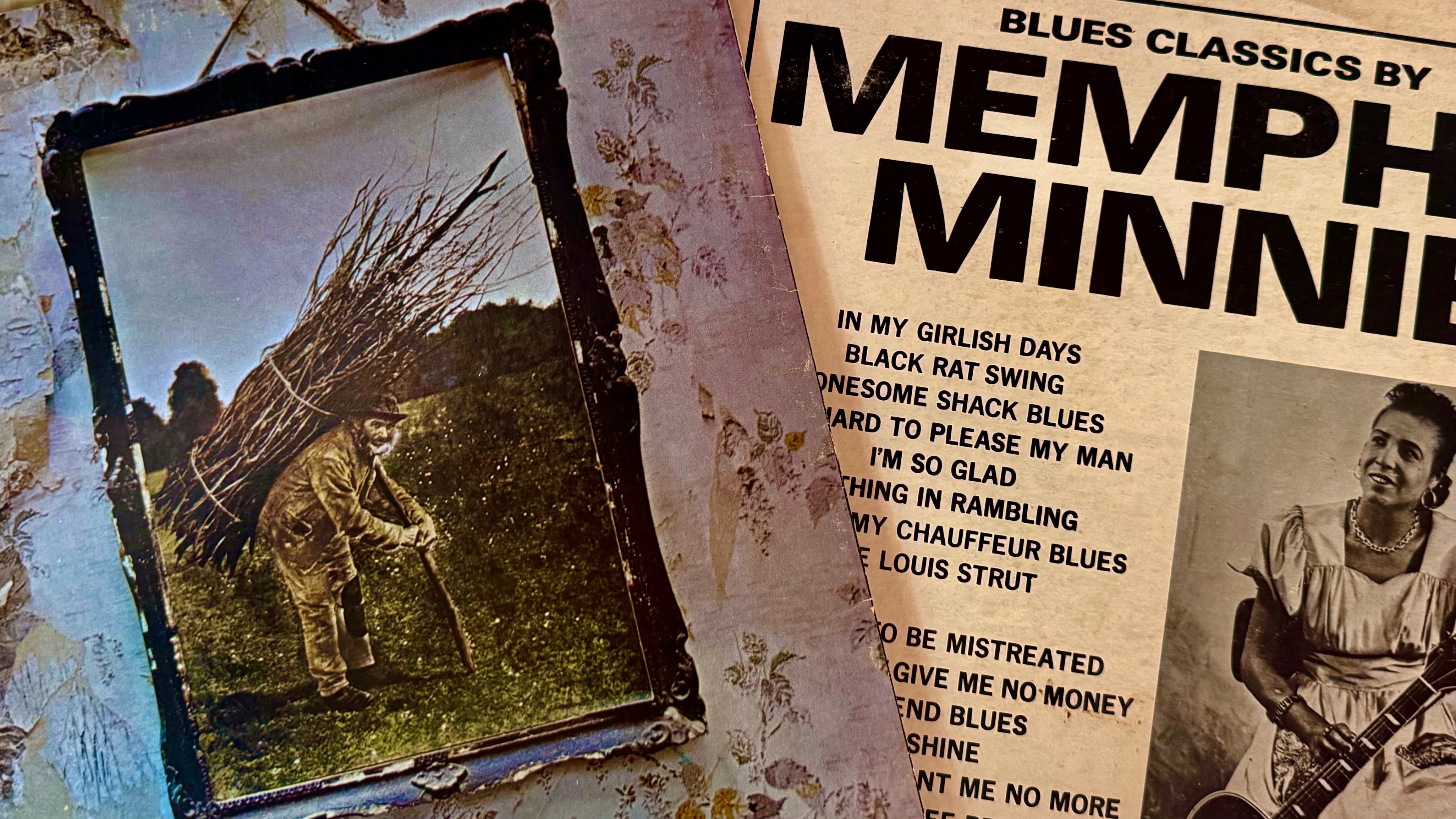
This article is for every reader who commented on 9 Songs That Led Zeppelin Stole. And man, there were a lot of you.
I read and appreciated every one of your comments. I think I can sum up the discussion thusly:
Half of you were like “Yeah man. Those dudes were awesome, but they were also a bunch of assholes when it came to copyright infringement.”
The other half of you were like, “Who cares? Everybody steals. Get over it. Long Live the Mighty Zep!”
Both good points. And it was a great discussion. But after a while, I felt like I was starting to repeat myself. So a lot of your comments fell through the cracks. My apologies.
It doesn’t mean I don’t love you and it doesn’t mean I wasn’t paying attention. I was just gathering my thoughts.
And now, in response to those many unanswered comments, here’s a little follow-up fodder.
Good Point But…
A few very astute readers noted the exclusion of “When the Levee Breaks” from Zeppelin’s rap sheet. Well observed. But there is a good reason for it.
I’d like to think I’m a fair man. Led Zeppelin is guilty of theft. This is not up for debate. But there are some instances in which they merely borrowed rather than stole.
“When the Levee Breaks” is one of these instances. Here, Zeppelin actually gave credit where it was due.
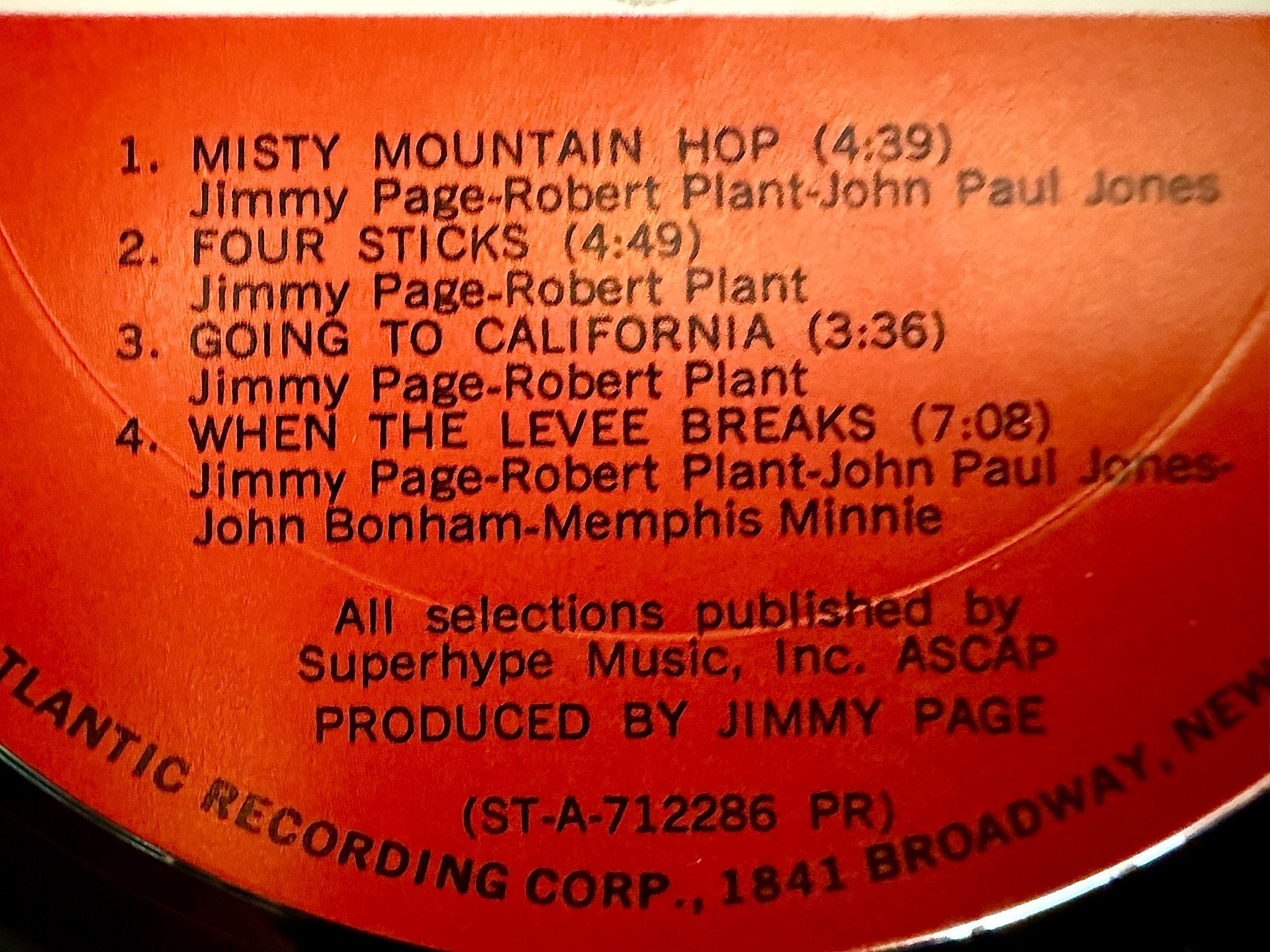
Of course, Zeppelin’s still gonna Zeppelin. They also took plenty of credit for themselves. But again, I’m a fair man. So I’ll concede that perhaps they even deserved the credit here.
Let’s dig in.
The Great Mississippi Flood of 1927
Like a lot of Zeppelin tunes, the story behind this one begins a few decades before Page and Plant were born, and a continent away. Many of the popular country, folk and blues songs of the prewar American South were pulled directly from the headlines of the time. “When the Levee Breaks” is a perfectly tragic example.
The Great Mississippi Flood of 1927 remains, to date, the most catastrophic river flood in U.S. history. During the last few months of 1926, heavy rainfall began pushing the Mississippi River beyond its capacity. Over-development along the banks and a poorly conceived levee system only intensified the destructive potential of the increasingly swollen river.
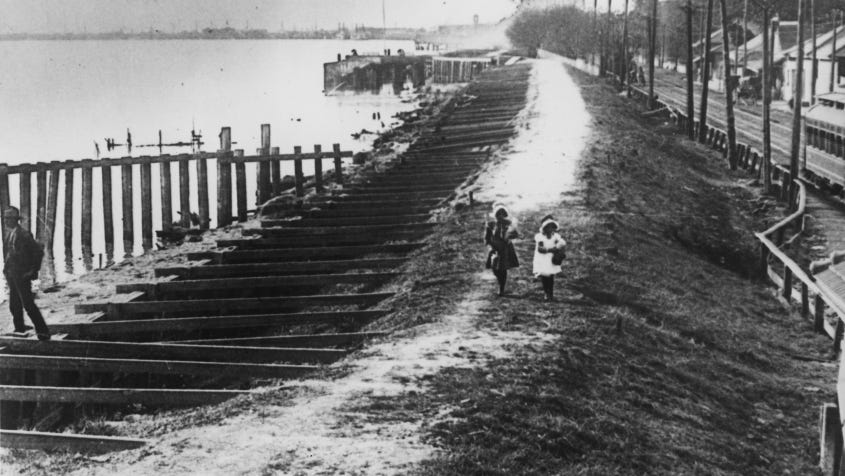
Starting in early 1927, a period of relentless flooding ultimately submerged nearly 27,000 square miles of surrounding land in up to 30 feet of water.
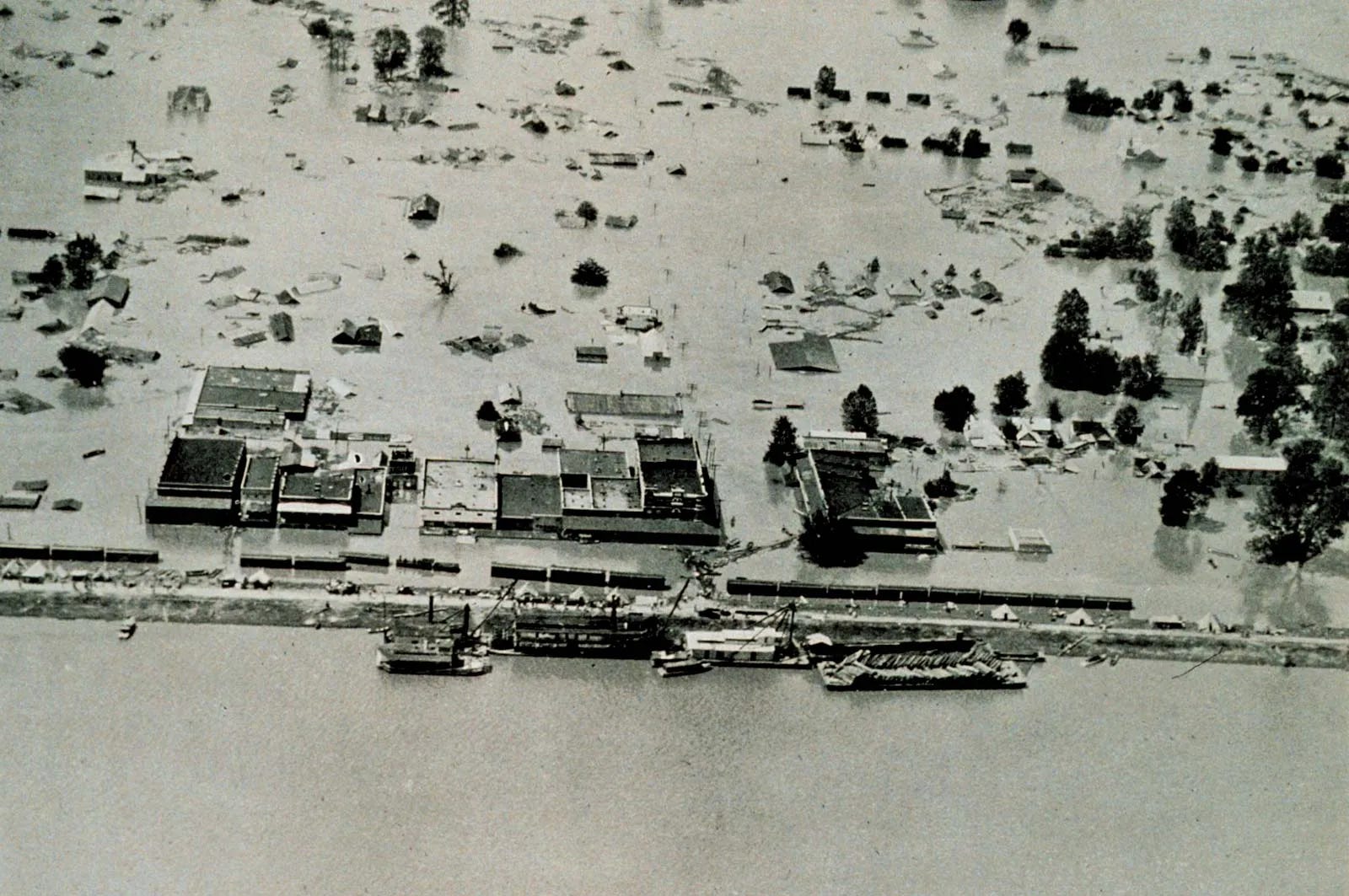
Flooding impacted areas of Missouri, Illinois, Kansas, Tennessee, Kentucky, Oklahoma, and Texas. Hardest hit were Louisiana, Mississippi and Arkansas, the last of which saw more than 14% of its landmass covered in water.
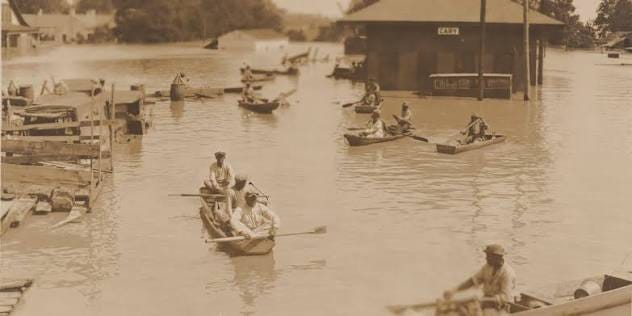
The flooding cost 500 people their lives, 630,000 people their homes, and taxpayers an estimated $246 million to $1 billion (or about $3.6–$14.5 billion today).
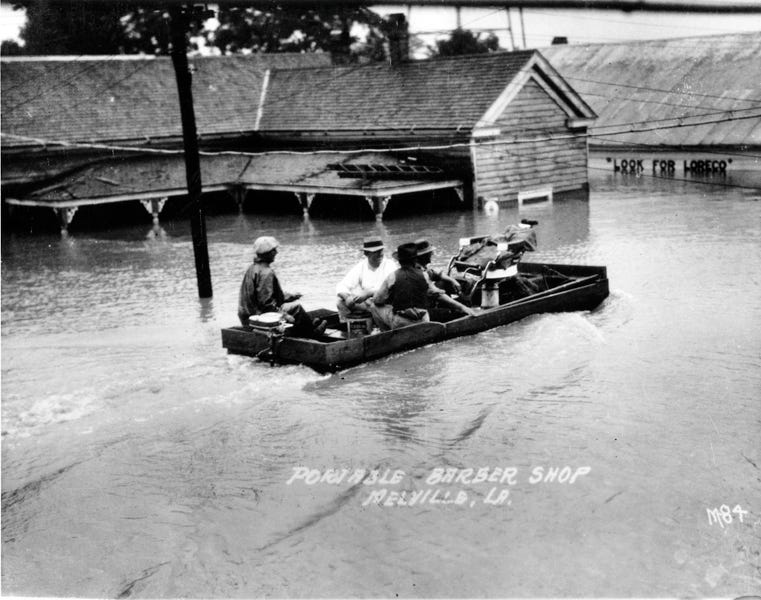
It was also a catalyst for a major change in the geographical distribution of the Black Southerners. The flooding caused massive displacement, especially among Black communities in the lower-lying regions of the Mississippi Delta. Of those who lost their homes, an estimated 75% were Black.
The Aftermath
As the floodwaters eventually receded in August of 1927, many found themselves living in government-managed refugee camps under harsh conditions and a clear racial hierarchy. Displaced Black laborers from nearby plantations were reportedly detained in these camps against their will and exploited for cheap labor as the region attempted to rebuild.
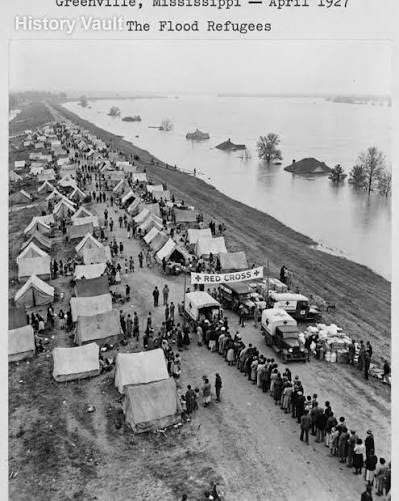
The combination of displacement and poor conditions helped accelerate a Great Migration that was already underway. Over the next several decades, an estimated 6 million Black Southerners would journey to the industrial cities of the North in search of better opportunity. Among them were untold numbers of Black musicians, who ultimately helped transform cities like Chicago, Detroit, New York and Philadelphia into hotbeds for blues, R&B, jazz, and soul.
Memphis Minnie
And such is the story of Memphis Minnie (nee Lizzie Douglas). Memphis Minnie was born in Louisiana and raised in Mississippi but ran away to Memphis at the age of 13 to become a professional musician. She spent those formative years busking on Beale Street under the name Kid Douglas.
At age 19, Douglas earned a spot as a touring musician with the Ringling Brothers Circus. During her time there — between 1916 and 1920 — she developed an increasingly bold and refined stage presence.
After four solid years on the road, she left the circus and returned to Beale Street, now a seasoned country blues musician calling herself Memphis Minnie. There, she earned her living through a combination of performance and prostitution, occasionally returning to the family farm in Walls, Mississippi when money ran low. This is where she was when the Great Flood tore through the Mississippi Delta in 1927.
Memphis Minnie and the Great Flood
Walls, Mississippi sits just south of Memphis, and just north of a major levee system. On April 12th, weeks of ceaseless rain caused this levee to burst, sweeping away houses and submerging farmlands. This included the Douglas family farm, where Minnie was staying at the time. She witnessed the devastation and experienced the evacuation first-hand.
But she didn’t stick around long. She soon returned to Memphis. There, she met, teamed up with, and ultimately married Kansas Joe McCoy in 1929.
Memphis Minnie and Kansas Joe
Born in Raymond, Mississippi, Joe was a blues singer and songwriter, as well as the older brother of noted blues accompanist and mandolin player Papa Charlie McCoy.
Kansas Joe also played mandolin as well as guitar, but Minnie was the driving creative force behind the duo. She struck an authoritative persona onstage, and she was regarded as the more technically proficient guitarist of the two.
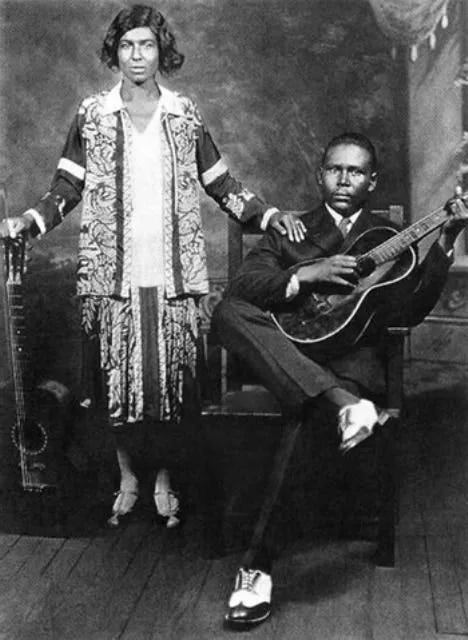
The recently-wedded duo was soon discovered by a Columbia Records talent scout while playing for dimes outside a Memphis barbershop. It was only a matter of days before they were cutting records in the studio. They recorded “When the Levee Breaks” during their very first Columbia session in June of 1929.
“When the Levee Breaks” recounts the true story of a local man from Walls, Mississippi who lost his home and family in the floodwaters.
It was released as a 78 RPM single in 1929 with a song called “That‘ll Be Alright” on the flipside.
Both songs were credited equally to Joe and Minnie.
The events captured so vividly in “When the Levee Breaks” were still painfully fresh in the minds of local residents. Though “Race Records” weren’t yet included on the charts, historians say the original “When the Levee Breaks” sold enough copies to rank as a modest hit. (As we’ll later discuss, it was enough of a hit to show up in Robert Plant’s personal record collection).
More on Minnie
We would be remiss not to spend just another moment on Memphis Minnie — a towering figure in the history of the blues. Minnie and Joe were already recording sides for Columbia when they joined the Great Migration. Relocating to an increasingly hot blues scene in Chicago, they cut their biggest hit together in 1930 with “Bumble Bee”.
As they became increasingly successful, Minnie’s big personality shone through. She defied gender norms of the era. She dressed elegantly, wore opulent jewelry, and comported herself as a serious professional on stage. She also chewed tobacco, was quick to pull a switchblade on any man who crossed her, and once, by his own report, won a bottle of whiskey and a bottle of gin by besting Big Bill Broonzy in a blues showdown.
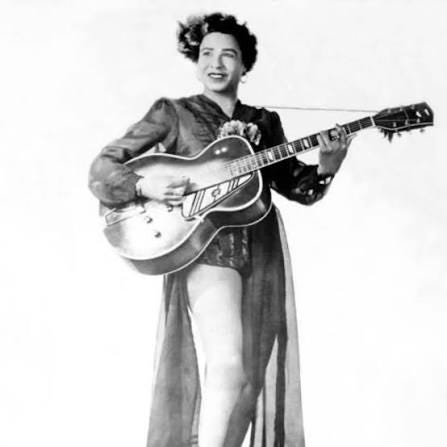
In fact, by some accounts, Memphis Minnie and Kansas Joe would ultimately split in 1935 because the latter grew jealous of living in his wife’s shadow.
More McCoy
Joe would go on to record alongside his brother in a group called Harlem Hamfats. Notably, they recorded a tune called “Weed Smoker’s Dream” in 1936.
Joe reworked the tune for mainstream consumption, and in the process, authored “Why Don’t You Do Right” for Lil Green in 1941.
It became a massive hit when Peggy Lee and Benny Goodman recorded it together the following year, selling over a million copies and reaching #4 on both the Billboard chart and the Harlem Hit Parade.
“Why Don’t You Do Right” catapulted Peggy Lee to stardom. It also became a jazz standard, and remains Joe’s most enduring composition. Sadly, Joe would pass away from heart disease in 1950, at just 44 years of age. Only months later, his brother Charlie would pass away from “paralytic brain disease” at just 39.
Back to Minnie
Around 1938, Minnie married another blues guitarist named Ernest Lawlars, who performed under the name Little Son Joe. They began recording together in 1939, and Minnie continued to land hits.
Minnie would go on to write and record more than 200 songs. And as part of Chicago’s burgeoning electric blues scene, Memphis plugged her guitar in by the early ‘40s. Here she is playing alongside Lawlars, and throwing down those pioneering electric fills and solos.
Minnie performed and recorded alongside Lawlars until she was paralyzed by a stroke in 1960. Lawlars died one year later, also as a result of a stroke.
Minnie spent her remaining years in nursing home care. (More on that in a minute).
Robert Plant’s Record Collection
The point of the story above is twofold.
First of all, Memphis Minnie was a well-recognized figure in the annals of blues history, a true pioneer in both Delta country blues and Chicago electric blues. She had hits for big labels like Columbia and Vocalion. Lots of people bought her records, including Robert Plant. He owned a copy of “When the Levee Breaks” and has acknowledged sharing it with his bandmates during sessions for Zeppelin’s 4th album.
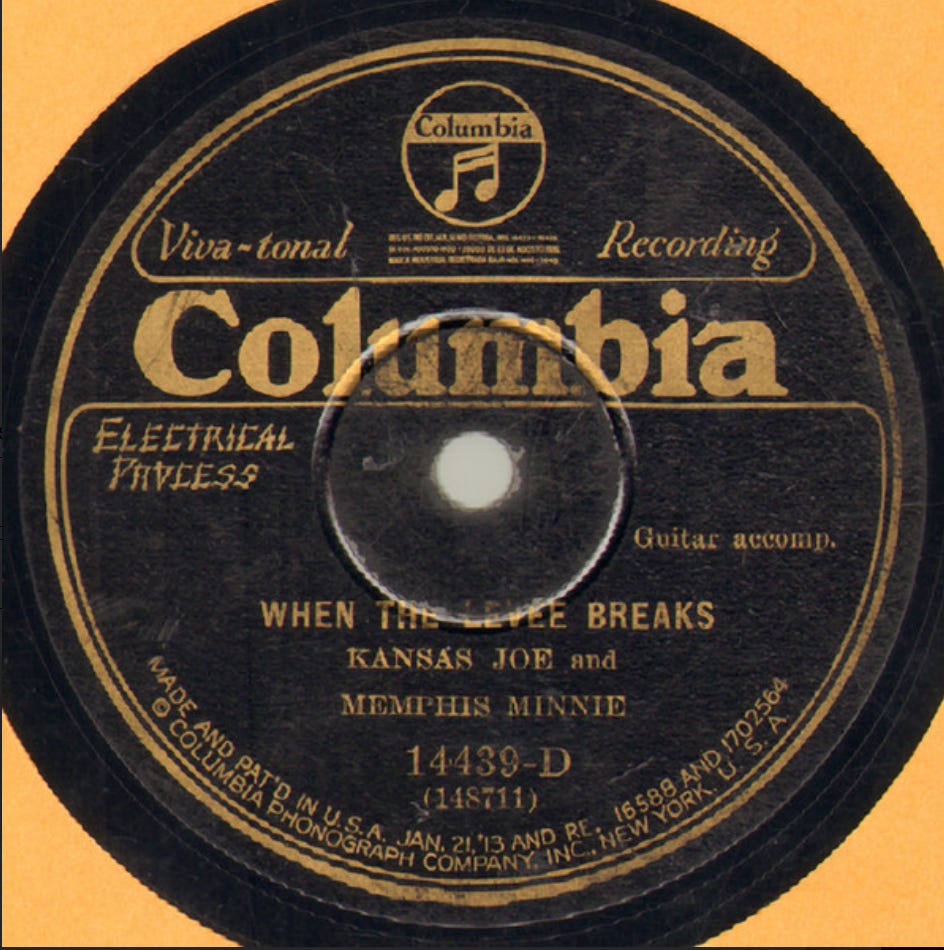
The other point of this story is that “When the Levee Breaks” is intensely personal. It reflects something real and heartbreaking that Memphis Minnie and Kansas Joe actually lived through. Page and Plant resisted the temptation to claim that story as their own.
Plant took the lyrics wholesale from the original. Because Minnie wrote the lyrics, she was credited for her contributions. However, as a collective unit, Led Zeppelin fully reimagined Kansas Joe’s musical composition and arrangement. Therefore, the late bluesman was not credited for his contributions.
And here’s the thing. Led Zeppelin’s “When the Levee Breaks” is a truly original sonic invention.
Led Zeppelin’s Levee
Led Zeppelin released their Untitled 4th album on November 8, 1971. Typically but unofficially referred to as Led Zeppelin IV, it was a success without precedent — a hard rock album anchored by an 8-minute prog masterpiece with hardcore Dungeons and Dragons vibes that somehow went on to sell 37 million copies.
Zeppelin IV concludes with “When the Levee Breaks”. As much as any blues standard in the Zeppelin catalogue, this recording shows reverence to its source material while forging something entirely new.
Jimmy Page trades out the country guitar picking for a doom-laden electric drone. In the stead of Minnie’s straight-ahead delivery is Plant’s mournful wail. A harp swells ominously on the horizon. John Paul Jones lays a menacing bass line beneath it all, like stormwaters rising up from the basement.
And John Bonham – his drum part was recorded to such dramatic effect by suspending microphones from an overhead stairwell in Zeppelin’s three-story Headley Grange recording space — he truly summons the hammer of the gods here, producing pure, pulsating thunder.
And then, the deluge. Led Zeppelin scales and stretches the original into a devastating epic that pounds, swirls and ultimately drowns in apocalyptic dread.
This is a meaningful accomplishment, because the true events inspiring the original “When the Levee Breaks” were apocalyptic to those who lived them. This is one of Zeppelin’s finest moments, both for what they achieved musically and because they shared the achievement with those who came before them.
Denouement
By 1971, Memphis Minnie was bound to a wheelchair and depended entirely on 24/7 nursing care. The royalties she earned from “When the Levee Breaks” paid for her care until her death at age 76 in 1973.
Today, she is buried in Walls, Mississippi and rightly regarded as a blues giant.
Speaking of Kansas Joe, I thought you might be interested in my three-part series on a long-lost blues photo, that may include him. Here's a link to part one: https://bradtolinski.substack.com/p/is-this-the-most-important-unseen
"Levee" was later (sadly and fittingly) revived by Buckwheat Zydeco in the aftermath of Hurricane Katrina...